What is Parkinson’s Disease?
Parkinson’s Disease is a progressive neurodegenerative disorder that affects the nervous system, primarily impacting movement. It occurs when nerve cells in the brain that produce dopamine, a chemical that helps control movement, become damaged or die. While the exact cause is unknown, researchers believe genetic and environmental factors may contribute to its development.
Recognizing the Symptoms
Motor Symptoms
Parkinson’s Disease often begins with mild symptoms that progress over time. Common motor symptoms include:
- Tremors: Shaking, often starting in the hands or fingers.
- Bradykinesia: Slowness of movement that can make everyday tasks more difficult.
- Rigidity: Muscle stiffness, often leading to discomfort and reduced range of motion.
- Postural Instability: Difficulty maintaining balance and coordination.
Non-Motor Symptoms
Parkinson’s Disease often begins with mild symptoms that progress over time. Common motor symptoms include:
- Sleep disturbances and fatigue.
- Depression and anxiety.
- Cognitive changes, such as difficulty with memory and concentration.
- Gastrointestinal issues, including constipation.
Understanding these symptoms can help individuals seek early diagnosis and intervention.
William & Rita Abraham Parkinson’s Speaker Series Video Library
Learn From The Experts
Browse recordings from the William & Rita Abraham Parkinson’s Speaker Series featuring experts discussing treatment options, symptom management, caregiving, and the latest advancements in Parkinson’s care. Watch anytime, at your own pace.
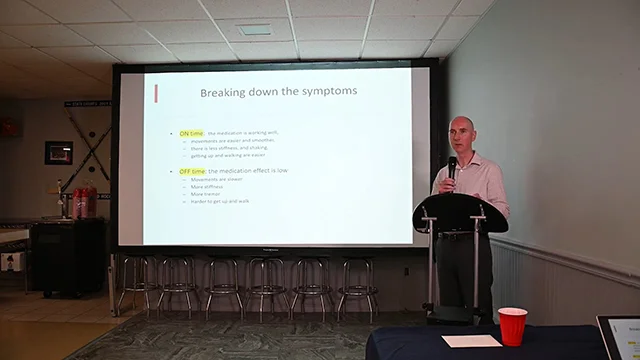
Parkinson’s Treatment: Expert Insights from Dr. Octavian Adam
Explore the latest advancements in Parkinson’s disease treatment in this full-length presentation by neurologist Dr. Octavian Adam, recorded as part of the William & Rita Abraham Parkinson’s Speaker Series.
More Expert Presentations
Dr. Octavian Adam
Chief of Neurology
Albany Stratton VA Medical Center

Parkinson’s Symposium
Presentations and panel discussions from leading healthcare professionals.

Dr. Satish Krishnamurthy
Neurosurgeon
CNY Brain and Spine Neurosurgery
The Progression of Parkinson’s
Stages of the Disease
Parkinson’s Disease progresses in stages, ranging from mild symptoms that do not interfere with daily life to advanced stages that require comprehensive care. Early detection and treatment can slow progression and improve quality of life.
Variability Among Individuals
No two cases of Parkinson’s are identical. Symptoms, progression rates, and responses to treatment vary widely, emphasizing the importance of personalized care.

Management and Treatment Options
Medical Interventions
Treatment for Parkinson’s often includes:
- Medications: To replenish or mimic dopamine, helping to manage motor symptoms.
- Surgical Options: Deep brain stimulation (DBS) for advanced cases.
Lifestyle Adjustments
Healthy lifestyle choices can play a key role in managing Parkinson’s:
- Regular exercise to maintain mobility and flexibility.
- A balanced diet to support overall health and energy.
- Stress management techniques to improve emotional well-being.
Support and Resources
Building a Community of Care
Living with Parkinson’s is a journey best navigated with support. Community Wellness Partners provides:
- Support Groups: Share experiences and connect with others facing similar challenges.
- Educational Workshops: Stay informed about advancements in Parkinson’s research and treatment.
- Resource Centers: Access information, tools, and guidance for individuals and families.